
As the supermarket format continues to evolve, driven by changing consumer expectations and technological advancements, shelving systems are no longer simply devices for storing goods.
By 2026, shelving will play a central role in improving retail efficiency, customer experience, and operational flexibility.
This article summarizes the latest trends impacting supermarket shelving and outlines priorities retailers should prioritize to remain competitive.
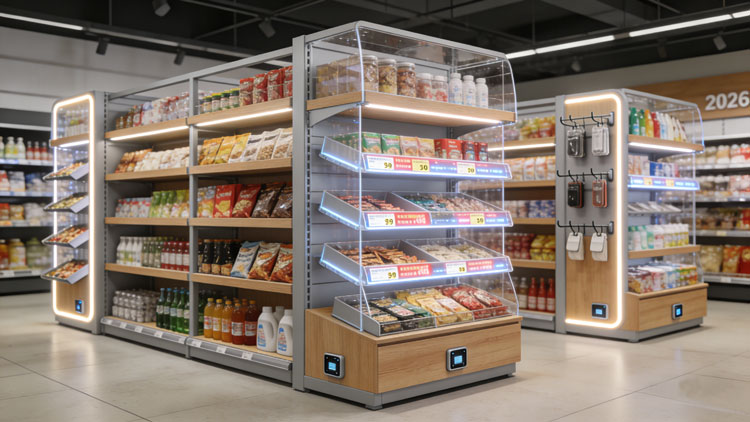
1. Modular and Flexible Shelving Systems
One of the most significant trends in supermarket shelving is the continued adoption of modular and flexible shelving designs. Retailers are increasingly recognizing that fixed shelving hinders rapid reconfiguration for seasonal events, promotions, or changes in product variety.
Modular systems allow for easy repositioning of shelves and accessories without significant investment or downtime, helping stores adjust their display layouts in real time. This flexibility becomes crucial as supermarkets strive to balance a wide variety of products with efficient space utilization.
Operational Takeaways:
- Implement adjustable shelving units that support rapid layout updates.
- Use endcap displays and accessory kits to highlight high-margin or seasonal categories.
- Prioritize shelving systems with tool-free reconfiguration to accelerate store resets.
2. Smart Shelving: Technology Integrationg?
The rise of smart shelf technology is reshaping how supermarkets manage inventory and interact with customers. Shelves equipped with IoT sensors, RFID tags, and digital price tags provide real-time inventory visibility, helping to reduce stockouts and optimize manpower required for replenishment.
Smart shelves can also support digital pricing and promotional content, enabling headless pricing and dynamic offer changes without the need for manual labeling.
In addition, advanced systems can be integrated with store analytics platforms to track shopper behavior (such as dwell time and product interaction), thereby enabling data-driven merchandise display decisions.
Operational Takeaways:
- Invest in shelves with embedded sensors for inventory tracking.
- Integrate digital price labels to streamline pricing updates and promotional agility.
- Leverage data from smart shelving to inform planograms and assortment strategies.
3. Sustainability and Eco-Conscious Materials
Environmental concerns are influencing consumer purchasing decisions, and supermarket shelves are no exception. Retailers are addressing this challenge by integrating sustainable materials in their display systems.
These materials include recycled metals, recycled composites, and surface treatments that minimize environmental impact without compromising durability.
As sustainability gains increasing consumer attention, using eco-friendly shelving can strengthen brand value and support businesses in fulfilling their environmental, social, and governance (ESG) commitments.
Operational Takeaways:
- Specify recycled or recyclable materials in new shelving orders.
- Highlight sustainability credentials in store marketing to strengthen consumer trust.
- Partner with vendors that provide end-of-life recycling programs for fixtures.
4. Enhanced Visual Merchandising and Experience
Aesthetic appeal and product visibility on shelves are crucial for enhancing customer engagement. Effective shelf design goes beyond simple functional storage, supporting visual merchandising principles, guiding customer flow, and focusing attention on key product categories.
Retailers are exploring bio-friendly design elements, minimalist aesthetics, and accent lighting to create a comfortable shopping environment, improve the customer shopping experience, and extend dwell time.
Operational Takeaways:
- Incorporate layered lighting and neutral color palettes to enhance product display.
- Use shelving to create zones that support shopper journeys, such as fresh foods, promotions, and value segments.
- Train teams in planogram principles to maximize visibility and reduce clutter.

5. Integration With Omnichannel Operations
The lines between physical and digital retail are becoming increasingly blurred. Shelves must support omnichannel strategies, such as in-store pickup, scan-to-buy, and online price lookup.
Solutions such as QR codes embedded in shelves, smart lockers, and online-to-offline pickup shelf modules can improve order fulfillment efficiency and strengthen the link between online orders and physical inventory.
Operational Takeaways:
- Design shelving zones that facilitate quick picking for online orders.
- Equip shelves with QR codes and digital labels to support customer self-service.
- Consider modular shelving that can integrate with automated picking systems where appropriate.
6. Data-Driven Assortment and Display Optimization
By 2026, leading supermarkets will use shelf performance data to optimize product placement and assortment dynamically.
Data collected from point-of-sale systems, sensors, and shopper analytics will increasingly dictate how shelves are stocked and merchandised.
Retailers that align shelf space allocation with traffic patterns and purchase behavior can improve turnover and reduce obsolete inventory.
Operational Takeaways:
- Consolidate shelf data into analytics dashboards to guide planogram adjustments.
- Use predictive models to anticipate demand and prevent stockouts.
- Link shelf performance metrics to replenishment and category management workflows.
Conclusion
Supermarket shelving in 2026 is about more than structure—it’s about performance, experience, and adaptability.
Retailers that embrace modular systems, smart technology, sustainable materials, and data-driven merchandising will unlock operational efficiencies and elevate the customer experience.
As the marketplace evolves, shelving strategies that balance flexibility, technology, and visual impact will define competitive advantage.

If your organization is planning a store remodel or considering shelf upgrades, aligning investments with these trends can help future-proof your operations and support long-term growth.
📧 Email: [email protected]
📱 WhatsApp: +86-18350222213