
A warehouse is more than a place to store goods. It is an operational system where storage capacity, accessibility, material flow, and safety all have to work together.
At Aceally, we believe an effective warehouse storage solution should begin with the operation—not simply with the choice of a rack.
The right system depends on several factors, including pallet dimensions and weights, inventory turnover, forklift or handling equipment, available floor space, required storage density, and the way goods move through the warehouse. Industry guidance from organizations such as SEMA also emphasizes that pallet racking is an engineered structure, with design considerations including structural loads, operating conditions, safety factors, and integration with other warehouse equipment.
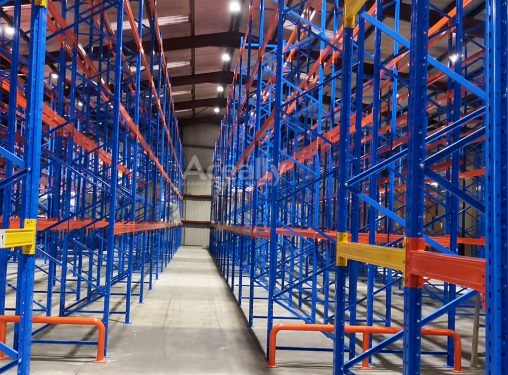
Choosing the Right Warehouse Storage System
Different storage requirements call for different approaches. The most suitable system depends on how inventory is stored, accessed, and moved through the warehouse.
Selective pallet racking is often a practical choice when direct access to individual pallets is important. It provides flexibility for warehouses handling a wide range of SKUs and allows pallet positions to be accessed without moving other loads.
Where storage density is a higher priority, drive-in racking can make better use of available floor space for warehouses storing larger quantities of the same or similar products. Its configuration is particularly suited to high-density storage where direct access to every pallet is not required.
Push-back racking provides another high-density option while allowing pallets to be stored and retrieved from the same aisle. It can be useful where warehouses need to increase pallet density while maintaining relatively convenient access to multiple pallet positions.
For products with high inventory turnover, pallet flow racking can support organized pallet movement and FIFO inventory management. The choice depends on product characteristics, throughput requirements, and the warehouse’s handling processes.
For long, bulky, or irregularly shaped products, cantilever racking can provide a more suitable storage arrangement than conventional pallet racking. When you need more usable space without expanding the building footprint, mezzanine systems can also make better use of vertical warehouse space.
The objective is not to install the maximum amount of steel. It is to create the right balance between storage density, accessibility, and operational efficiency.
What to Consider Before Choosing a Storage System
Before selecting a warehouse storage system, evaluate several practical factors together.
Pallet dimensions and load weight determine the required rack configuration, beam capacity, and storage levels. Different pallet sizes and load characteristics may require different rack dimensions and structural specifications.
SKU quantity and inventory characteristics also influence the choice. A warehouse with many SKUs and frequent individual pallet access may benefit from selective racking, while facilities storing larger quantities of fewer SKUs may prioritize higher-density systems.
Inventory turnover is another important consideration. Fast-moving goods may require easier access and efficient picking, while slower-moving reserve stock can often be stored in higher-density configurations.
Forklifts and handling equipment should also be considered during system design. A rack layout needs to provide suitable aisle widths, clearances, and operating conditions for the equipment used in the warehouse.
Finally, the available floor and vertical space should be evaluated together. Increasing storage capacity does not necessarily mean adding more rack rows. In some facilities, better use of vertical space through taller racking or mezzanine systems can provide a more effective solution.
Safety Starts with the Design
Warehouse racking carries substantial loads and operates alongside forklifts and other material-handling equipment. Therefore, safety cannot be treated as an afterthought.
A properly designed system should consider the intended loads, rack configuration, clearances, handling equipment, and appropriate protection measures. Load information should also be clearly communicated to warehouse personnel. SEMA guidance identifies load notices, rack protection and regular inspections as important elements of safe racking operation.
Protection such as upright guards, rack guards and end-of-aisle barriers can help reduce the consequences of forklift impact. However, protection equipment should form part of an overall warehouse safety strategy rather than replace proper rack design, installation and inspection.
Regular inspections are also important because warehouse conditions can change over time. Rack damage, changes to loading patterns, modifications to the layout, or changes in handling equipment may all affect the safe operation of a storage system.
From Storage Equipment to a Complete Warehouse Solution
At Aceally, our approach is to look beyond individual products.
Whether the requirement is pallet racking, shelving, cantilever racking, drive-in systems, mezzanine platforms or other warehouse storage equipment, the solution should support the complete warehouse flow—from receiving and storage to picking and dispatch.
As a manufacturer of warehouse storage equipment, Aceally combines engineering, production and project support within one supply chain. This allows storage systems to be developed around load requirements, warehouse layouts, handling equipment, and operating conditions rather than treated simply as standard off-the-shelf products.
A well-planned storage system can help businesses make better use of available space while maintaining product accessibility and safe warehouse operations.
The goal is simple: make every square meter work harder without compromising safety or accessibility.
With engineering capabilities, manufacturing experience, and a broad range of warehouse storage solutions, Aceally helps businesses build storage systems designed around the way their warehouses actually operate.