
1. When using heavy-duty racks, the principle is placing light goods at the top and heavy goods at the bottom. Which will make the warehouse rack more stable.
2. Heavy-duty racks should be used to prevent overloading: the weight of each layer of goods stored should not exceed the designed maximum capacity of the shelves.
3. When using heavy-duty racks, it is necessary to prevent excessive height and width: the height and width of the shelves are limited, and the dimensions of the pallet and goods should be slightly less than the clear space of 105mm.
4. Use heavy-duty racks to prevent collisions: Forklifts should be handled as gently as possible during operation.
5. When using heavy-duty racks, it is necessary to prevent the use of non-standard floor boards (pallets) on the warehouse racks.
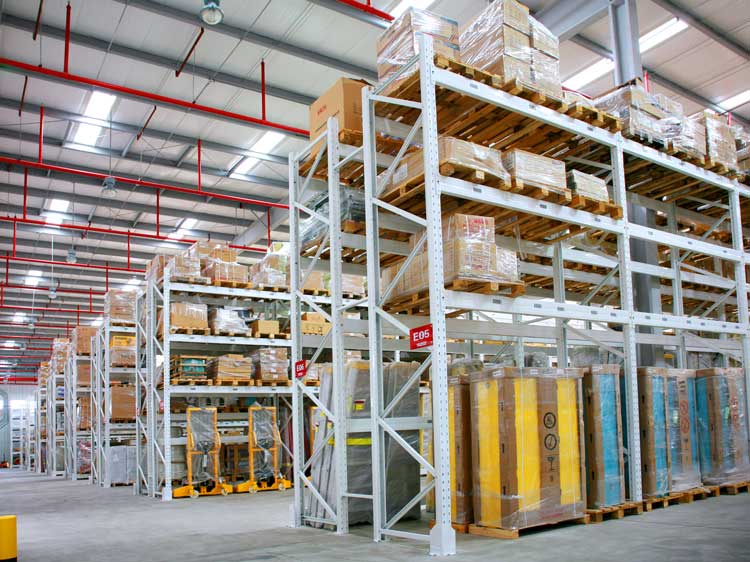
The temperature, humidity, ground conditions, sunlight intensity, and other factors affect the usage environment of storage racks.
In terms of temperature:
Both high and low temperatures can lead to a decrease in rack life, especially at low temperatures. When the temperature reaches below zero, the steel materials of the racks will become brittle, especially at lower temperatures, which can have a significant impact on load-bearing.
In terms of humidity:
Both high and low humidity are not good for warehouse racks. High humidity can cause rusting on shelves, while low humidity can cause the spray coating to fall off prematurely due to being too dry.
In terms of ground conditions:
If the ground hardness is not enough, it will cause the racks to sink after placing goods, and the overall sinking is easy to say. If a single place sinks and other places do not, it will be more troublesome.
So when using the pallet rack, we should consider all the information to build a safe rack warehouse environment.