
In biopharmaceutical warehouses, the selection of storage racks must comprehensively consider factors such as drug characteristics (such as temperature and humidity sensitivity, easy contamination, and fragility), storage requirements (such as batch management and first-in-first-out), and compliance (GMP/GSP requirements). The following is an analysis of warehouse storage rack types suitable for biopharmaceutical warehouses and their applicable scenarios:

1. Pallet Racking
Suitable for: Bulk and full-case storage of APIs, packaging materials, or finished products.
Advantages:
- High load capacity: A single layer can support several tons, making it suitable for heavy cargo.
- Flexibility: Can be used with forklifts for efficient storage and retrieval, supporting first-in-first-out (FIFO) management.
- Compatibility: Accepts various packaging formats, including pallets and cartons.
Note: Ensure the warehouse floor is level and the storage pallet racking structure is stable to prevent vibration that may affect drug quality.
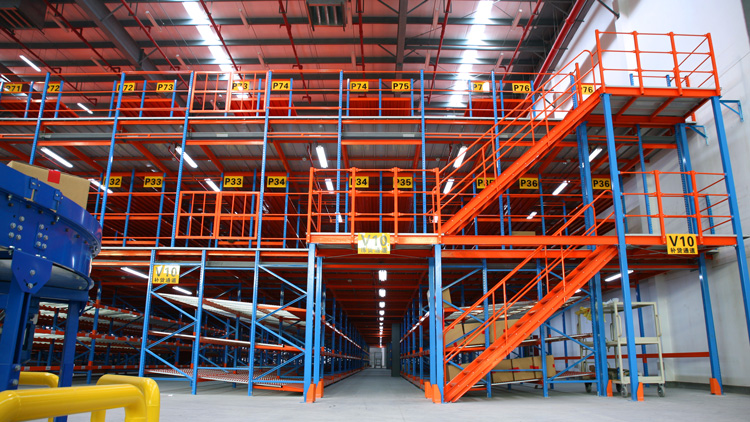
2. Mezzanine Floor Racking
Suitable for warehouses with limited space and requiring tiered storage for light weight pharmaceuticals (such as packaging materials and consumables).
Advantages:
- Vertical expansion: Utilizes upper floor space to increase storage area.
- Modular design: Adjusts floor height and layout to meet specific needs.
- Compliance: Must comply with building safety regulations, ensuring load-bearing and fire-resistance requirements.
Note: Safety railings and stairs are required to prevent falls.

3. Very Narrow Aisle Racking
Applicable Scenario: Warehouses with limited space require high-density storage of pharmaceuticals (such as finished pharmaceuticals and reagents).
Advantages:
- High space utilization: Aisle widths are only 1.6-2 meters, saving 30%-50% of space compared to traditional warehouse storage racking.
- Specialized Forklift Compatibility: Use a three-way stacking forklift for efficient storage and retrieval.
Note: Operator training is required to ensure safe operation.

4. Cold Storage Racks
Applicable Scenario: Pharmaceuticals requiring low-temperature storage (such as vaccines and biologics).
Advantages:
- Corrosion-Resistant Materials: Stainless steel or galvanized steel prevents rust.
- Insulated Design: The warehouse storage rack structure is compatible with the cold storage environment, minimizing temperature fluctuations.
Note: Regularly check the racks for frost to prevent impacts on their load-bearing capacity.
Recommended Rack Selection Guide:
Based on Drug Type:
API/Large Packages: Pallet Racking or Automated High-Volume Warehousing System.
Small Batch/High-Variety Products: Carton Flow Racks or Narrow Aisle Racking.
Long/Irregular Items: Cantilever Racking.
Cold Chain Drugs: Dedicated Cold Storage Racking.
Based on warehouse size:
Small and medium-sized warehouses: Mezzanine racking or carton flow racking.
Large warehouses: Automated high-bay warehouses or narrow-aisle racking.
Compliance requirements:
Ensure that racking materials meet GMP/GSP standards (e.g., non-toxic, corrosion-resistant).
Perform regular rack safety inspections (e.g., load-bearing tests, rust-proofing).
Future scalability:
Choose modular racking to facilitate future layout adjustments or storage capacity expansion.
By choosing the right warehouse racking type, biopharmaceutical warehouses can achieve efficient, safe, and compliant drug storage management while reducing operating costs.