
The Guide to High-Density Automated Storage
Radio shuttle racking represents a revolutionary approach to warehouse storage that combines high-density storage capabilities with semi-automated operations, maximizing space utilization while maintaining efficient inventory access. This advanced storage system utilizes remote-controlled shuttles that operate within storage aisles, eliminating the need for multiple aisles and significantly increasing storage capacity.
Ideal for cold storage facilities, high-volume operations, and environments storing homogeneous products, the radio shuttle racking system can increase storage density by up to 85% compared to traditional selective pallet racking while reducing forklift traffic and improving safety.

1. Introduction to Radio Shuttle Racking
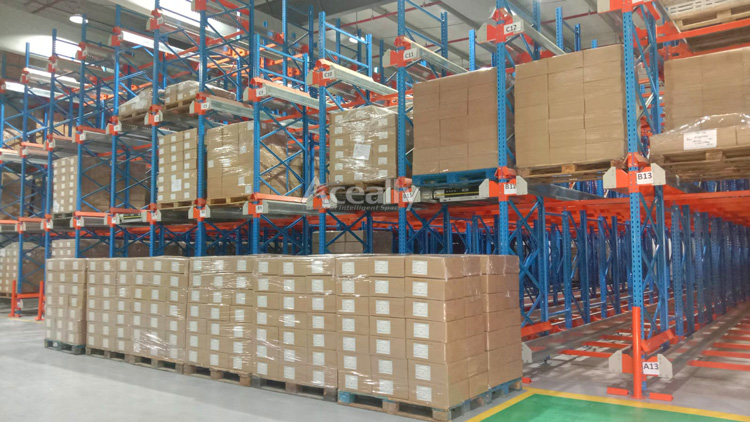
Radio shuttle racking is an advanced storage system that has revolutionized modern warehouse operations by providing unprecedented storage density and automation capabilities.The system represents a significant improvement over traditional storage methods such as selective pallet racking or drive-in racking, incorporating digital technology and robotic elements to create an efficient storage environment.The basic concept involves a remotely operated shuttle device that travels along tracks within storage aisles, transporting pallets to designated locations without requiring a forklift to enter the storage structure.
This technology has emerged in response to growing challenges in logistics and supply chain management. Rising real estate costs and increasing storage demands have made space optimization a crucial priority. Radio shuttle racking systems address these challenges by significantly reducing the number of access aisles required in a warehouse, potentially increasing storage capacity by 60-85% compared to traditional racking systems while maintaining relatively high throughput. This makes the technology particularly valuable for businesses that store large quantities of similar products and have moderate to high turnover rates.
Radio shuttle racking systems have become popular across a variety of industries, including food and beverage, pharmaceuticals, refrigerated logistics, and manufacturing. These systems maximize shelf space utilization while maintaining product integrity and accessibility, delivering an attractive return on investment. The continuous development of these systems towards higher levels of automation and integration with warehouse management systems has made radio shuttle technology a cornerstone of modern logistics infrastructure.
2. How Radio Shuttle Racking Works
2.1 Basic Operating Mechanism
The operation of radio shuttle racking is based on a synchronized process between traditional material handling equipment and specialized automation components. The process begins with a forklift operator placing a pallet at the entrance to a storage aisle. Instead of entering the aisle directly, the forklift loads and removes the goods. The wireless, remote-controlled shuttle rack then takes over and transports the pallet to a specific location within the deep storage aisle. This fundamental division of labor represents the core efficiency innovation of the radio shuttle racking system, as it eliminates the time-consuming and potentially dangerous forklift maneuvers within narrow storage aisles.
The shuttle itself is a compact robotic vehicle equipped with motorized wheels, a lifting mechanism, and sensors, enabling it to precisely navigate within the storage structure. Upon receiving commands via a wireless remote control or an integrated warehouse management system (WMS), the shuttle follows steel rails installed on each storage level, positions itself beneath the pallet, slightly lifts it, and transports it to the designated storage location. To retrieve a pallet, the shuttle reverses this process, retrieving the desired pallet and transporting it to the aisle entrance, where it is then retrieved by a forklift.
2.2 Inventory Management Methods
Radio shuttle systems typically employ either a first-in, first-out (FIFO) or first-in, last-out (FILO) inventory management principle, depending on the specific storage system configuration. In a FIFO configuration, storage racks are accessible from both ends, allowing shuttles to load pallets from one end and retrieve them from the other. This ensures optimal inventory rotation, which is crucial for perishable goods or products with expiration dates. This is particularly important in industries such as food and beverage or pharmaceuticals, where product expiration dates must be strictly managed.
For non-perishable goods or materials where strict turnover requirements are less stringent, a first-in, last-out (FILO) configuration (typically employing single-aisle racking) can provide higher storage density by eliminating rear aisles. Radio shuttle systems offer the flexibility to implement both approaches to accommodate varying product characteristics and inventory management requirements, enabling warehouses to tailor their storage approach to specific operational needs.
3. Key Components of the System
3.1 Structural Components
Shuttle Racking Structure: The physical framework of a radio shuttle system consists of sturdy upright frames and horizontal beams that form storage aisles. Unlike traditional racks, these structures utilize continuous rails that run the full depth of each storage level, providing a smooth path for shuttles to move. The racks are typically constructed of high-strength steel and coated with a protective coating to withstand the demands of automated operations and potential environmental challenges such as refrigerated conditions. The design must account for both the static loads of the stored pallets and the dynamic forces generated by the shuttles’ movement.
Aisle Guidance Systems: Precision guide systems are an integral part of the racking structure, ensuring shuttles navigate precisely throughout the storage aisles. These systems typically consist of specialized tracks manufactured to exacting tolerances, ensuring smooth and consistent shuttle operation throughout the system. The guide system must maintain precise alignment to prevent shuttle derailment and ensure reliable positioning accuracy, which is crucial for efficient operation and preventing product damage.
3.2 Technical Components
Radio Shuttle: The heart of the system is the shuttle itself—a battery-powered, wirelessly controlled vehicle that navigates the storage aisles. Modern shuttles incorporate advanced motor technology, a sophisticated lifting mechanism, and onboard intelligence, enabling them to execute commands with minimal human intervention. These devices are equipped with safety sensors to detect obstacles and prevent collisions, as well as a battery management system that monitors charge levels and initiates an automated charging sequence when needed. The shuttle’s payload capacity varies depending on the application, typically ranging from 500 kg to 1,500 kg per vehicle.
Control and Communication Systems: Radio shuttle systems utilize advanced control technologies, ranging from simple handheld remote controls to fully integrated computer-managed systems. Basic systems use a dedicated radio frequency to communicate with the shuttle, while advanced systems connect directly to a warehouse management system (WMS) or warehouse control system (WCS) for fully automated operation. These control systems coordinate shuttle movement, track inventory locations, optimize storage patterns, and provide operational data to monitor performance and improve efficiency.
4. Benefits of Radio Shuttle Racking
4.1 Space Efficiency and Storage Density
The most significant advantage of radio shuttle racking is its superior space efficiency. By eliminating the numerous aisles required in traditional racking systems, radio shuttle racking can achieve space utilization rates as high as 85-90%, compared to only around 40-50% for traditional selective pallet racking. This significant improvement is due to the deep-aisle storage configuration, which maximizes available space by storing pallets by depth rather than width and height. This increased density offers significant economic benefits, effectively doubling storage capacity within the same warehouse footprint or allowing the same inventory volume to be stored in a smaller facility, thereby reducing real estate costs, energy consumption, and building maintenance expenses.
The high-density storage enabled by the radio shuttle system is particularly valuable in specialized environments where space is at a premium or extremely expensive. Cold storage facilities are a prime application, as the high energy costs of refrigerated space make increased storage density crucial. Similarly, in urban environments where expansion space is limited or property costs are high, the ability to store more goods within existing facilities significantly improves operational efficiency and avoids costly relocation or expansion projects.
4.2 Productivity and Operational Efficiency
The radio shuttle system significantly improves workplace productivity through multiple mechanisms. By separating the functions of horizontal transport (handled by forklifts) and deep storage placement/retrieval (handled by shuttles), each unit can operate at optimal efficiency without interfering with the other. This parallel processing capability allows for simultaneous operations—while the shuttle is placing or retrieving pallets within a storage aisle, the forklift can perform other tasks, such as receiving new shipments, preparing outbound shipments, or servicing other storage aisles. This concurrent operation significantly reduces cycle time compared to traditional systems where forklifts must sequentially enter each storage aisle to access a pallet.
Reducing forklift traffic in narrow aisles also means less product damage and less wear and tear on equipment, as forklifts spend less time navigating tight spaces and are more likely to collide with racks. Furthermore, shuttle systems reduce the skill requirements for forklift operators, as they no longer need to navigate deep into storage aisles—instead, they simply precisely position themselves with the shuttle at the end of the aisle. This reduces training requirements and operator fatigue, while improving overall safety.
Reducing forklift traffic in narrow aisles also means less product damage and less wear and tear on equipment, as forklifts spend less time navigating tight spaces where they are more likely to collide with racks. Furthermore, shuttle systems reduce the skill requirements for forklift operators, as they no longer need to navigate deep into storage aisles—instead, they simply precisely position themselves with the shuttle at the end of an aisle. This reduces training requirements and operator fatigue, while improving overall safety.
4.3 Safety and Working Conditions
The implementation of radio shuttle technology significantly improves warehouse safety, reducing the need for forklifts to enter narrow storage aisles, a common source of accidents and product damage in traditional operations. With the shuttle system, forklifts operate only within the wider main aisles, significantly reducing the risk of collisions with racking structures, other equipment, or personnel. This functional separation creates an inherently safer work environment, particularly in facilities with high throughput requirements, where forklift traffic can otherwise be congested and dangerous.
Improved working conditions are reflected not only in personal safety but also in ergonomic benefits and the quality of the work environment. In cold storage applications in particular, radido shuttle systems minimize the time personnel spend in the cold storage environment, as forklift operators can work in the relatively warm main aisles while the shuttle performs tasks in the temperature-controlled storage area. Similarly, reducing the use of forklifts in confined spaces reduces operators’ exposure to exhaust fumes and noise, thereby improving overall working conditions and potentially reducing health-related absenteeism.
4.4 Versatility and Adaptability
Despite their operational complexity, radio shuttle systems maintain remarkable configuration flexibility to accommodate diverse operational needs. They can be configured in a variety of heights, with some systems reaching heights of 12 meters or more, effectively utilizing available vertical space. The system can also be designed to handle pallets of varying sizes within the same unit, with adjustable components accommodating varying load sizes without requiring structural modifications. This adaptability makes the shuttle system suitable for handling multiple product lines with varying packaging characteristics.
The scalability of radio shuttle systems enables operations to implement the technology gradually, starting with a single shuttle and limited-lane configuration and expanding as operational needs grow or funding becomes available. This modular approach lowers the initial investment barrier and allows businesses to gradually implement automation based on their specific timelines and budget constraints. Furthermore, many shuttle systems are designed with upgrade paths to higher levels of automation, potentially enabling integration with fully automated crane systems or other automated material handling technologies as operational needs evolve.
5. Applications and Ideal Use Cases
5.1 Industry-Specific Applications
Refrigerated and Perishable Goods: The cold chain industry has become a key application area for radio shuttle technology due to the superior economic benefits of maximizing storage density in refrigerated environments where energy costs are high. Shuttle systems enable first-in, first-out (FIFO) or first-in, last-out (FILO) inventory management, suitable for a wide range of perishable goods, from frozen products with long shelf lives to fresh produce requiring rigorous rotation. Reducing the need for forklift operations in extremely cold environments also improves working conditions and reduces equipment challenges associated with low-temperature operations.
Beverage and Food Industries: Companies handling high-volume packaged goods such as beverages, canned goods, and other non-perishable foods benefit from the radio shuttle system’s ability to store large quantities of homogeneous products. High density and good accessibility support the rapid turnover typical of these industries, while reduced product damage helps maintain quality standards. The system is particularly useful for seasonal products, which require high-density storage during off-peak hours and distribution during peak demand periods.
Manufacturing and Raw Materials: Manufacturers using bulk raw materials or components benefit from radio shuttle systems, which provide high-density storage for production inputs with easy access. This system supports just-in-time production principles, enabling efficient retrieval of required materials while minimizing dedicated storage space. Similarly, manufacturers can optimize finished product storage with shuttle technology, particularly for products with relatively stable demand patterns and limited SKU growth.
5.2 Operational Scenarios
High-Density Storage Requirements: Operations with space constraints or seeking to maximize the capacity of existing facilities are ideal for radio shuttles. Compared to traditional selective racking, this technology effectively doubles storage capacity within the same footprint, providing an attractive return on investment without the need for facility expansion. This is particularly important in urban environments where expansion is impossible or cost-prohibitive, or in specialized storage environments such as secure areas with limited physical space
Medium-Throughput Operations: Radio shuttle systems excel in environments with medium to high storage needs but moderate throughput demands. While shuttle systems offer good accessibility, they generally cannot match the instantaneous access to every pallet provided by traditional selective racking. Therefore, operations with somewhat predictable access patterns and that do not require instant access to every stored pallet will benefit the most. Operations with strong seasonal patterns—requiring high-density storage during off-season and efficient access during peak season—are particularly well-suited to shuttle technology.
6. Comparison with Other Storage Systems
6.1 Versus Conventional Storage Systems
Compared to traditional selective pallet racking, radio shuttle systems significantly increase storage density, but at the expense of accessibility to individual pallets. Selective racking provides immediate access to every stored pallet, but requires ample aisle space for forklifts, typically resulting in space utilization rates of only 40-50%. Radio shuttle systems sacrifice some accessibility for significantly higher density, making them better suited for operations storing a large number of fewer SKUs rather than those requiring immediate access to a wide range of different products.
Compared to other high-density storage systems, such as drive-in racks or drive-through racks, radio shuttle systems can significantly improve inventory control and reduce product damage. While drive-in racks can achieve similar density levels, they require a forklift to access the storage structure, which increases the risk of shelf damage and product mishandling. Radio shuttle systems also offer greater selectivity than drive-in systems because they can access specific pallets without completely reorganizing storage aisles. The automated nature of shuttle systems also reduces labor requirements compared to drive-in racks, which require skilled forklift operators to reach deep into the storage structure.
6.2 Versus Other Automated Systems
Radio shuttle technology occupies a middle ground in the automation landscape, between traditional manual systems and fully automated storage/retrieval systems (AS/RS). Compared to AS/RS solutions using small loaders or stacker cranes, radio shuttle systems generally require a lower initial investment and offer greater flexibility for manual intervention when needed. However, fully automated systems typically offer higher throughput rates and more precise inventory control, making them more suitable for very high-volume operations or fully automated material handling processes.
Within the shuttle-based system family, there are variants with varying degrees of automation. Basic radio shuttle systems require manual monitoring during each storage/retrieval cycle. In contrast, more advanced automated shuttle systems can operate with minimal human intervention under the control of a warehouse management system (WMS). The most complex implementations incorporate multi-level shuttle systems with vertical lift mechanisms, enabling shuttles to move between different storage levels, further reducing the need for manual handling. These systems approach the functionality of complete AS/RS solutions while retaining some of the flexibility and cost advantages of simple shuttle systems.
7. Implementation Considerations
7.1 System Selection Factors
Implementing a radio shuttle system requires careful consideration of multiple operational parameters and physical constraints. Key factors include pallet characteristics (size, weight, and stability), inventory profile (number of SKUs, quantity per SKU, and turnover rate), and throughput requirements (daily access operations). These factors determine the optimal shuttle system configuration, including the depth of storage aisles, the number of shuttles required, and the level of automation appropriate for the operation. Operations with widely varying pallet characteristics or inventory profiles may require a customizable system with adjustable components to accommodate this variability.
Facility constraints significantly influence system design, with building height, column spacing, and floor conditions being particularly important in determining optimal racking configuration and shuttle performance characteristics. The availability of trained personnel and existing material handling infrastructure also influences implementation planning, as operations with limited technical resources may prioritize simpler systems with lower maintenance requirements, while operations with existing automation systems may focus on integration capabilities with existing infrastructure.
7.2 Economic Considerations
The financial analysis of a radio shuttle implementation must go beyond simple equipment costs to include a comprehensive total cost of ownership calculation and ROI projection. The initial cost includes not only the shuttle equipment and racking structure, but also necessary infrastructure modifications (such as floor grading or reinforcement), control systems, and implementation services. These upfront investments must be balanced against operational savings derived from reduced labor requirements, lower energy costs (especially in refrigerated environments), reduced product damage, and increased storage capacity (which might otherwise require facility expansion).
With proper maintenance, shuttle equipment typically has an operational lifecycle of 7-10 years, making long-term service considerations a crucial factor in system selection. When comparing systems from different vendors, consider maintenance requirements, spare parts availability, technical support responsiveness, and potential software upgrade paths. Operations should also consider the residual value of the equipment and the potential need for reconfigurability should business needs change during the system’s operational lifecycle.
7.3 Future Trends and Developments
Radio shuttle technology continues to advance toward higher levels of automation and better integration with broader supply chain systems. Emerging trends include increasing intelligence in shuttle vehicles, with enhanced sensors and learning capabilities that optimize storage patterns based on access frequency. Advanced energy management systems with faster charging and more advanced battery technology increase uptime and reduce maintenance requirements. These developments continue to narrow the capability gap between shuttle systems and fully automated high-bay warehouses (AS/RS), while maintaining the cost advantage of shuttle technology.
Integration with other automated material handling equipment is another key development, with shuttle systems increasingly becoming key components of comprehensive automated storage solutions rather than stand-alone systems. The emergence of standardized communication protocols and interfaces with warehouse management systems has simplified integration and enhanced functionality. As automation technology becomes more widespread and affordable, radio shuttle systems are likely to incorporate increasingly sophisticated functionality while becoming more cost-effective for smaller businesses with limited automation budgets.
8. Conclusion
Radio shuttle racking represents a transformative technology in material handling, offering an exceptional balance between high storage density, operational efficiency, and implementation flexibility. By utilizing automated shuttles within deep storage aisles, these systems significantly increase storage capacity while maintaining reasonable accessibility and enhancing workplace safety. This technology is particularly valuable for businesses storing large quantities of homogeneous products with moderate turnover rates, such as cold storage facilities, food and beverage distributors, and manufacturers with high raw material storage requirements.
The decision to implement a radio shuttle system requires a careful analysis of operational needs, product characteristics, and facility constraints to ensure the rationale for system selection and configuration. While this technology requires a significant upfront investment, the potential returns from increased storage capacity, reduced operating costs, and improved inventory management, if implemented properly, can yield impressive financial results. As technology continues to advance toward automation and intelligence, radio shuttle systems are likely to become increasingly prevalent and powerful, providing greater value to a wider range of storage operations.
For companies that want to maximize their storage potential but don’t want to rely entirely on automated storage systems, radio shuttle technology represents an ideal compromise—it offers significant automation benefits while maintaining flexibility and requiring less operational transformation than fully automated solutions. As supply chains face increasing pressure to improve efficiency and reduce costs, radio shuttle racking has become a powerful tool for optimizing warehouse operations and maintaining a competitive advantage in a challenging market environment.