
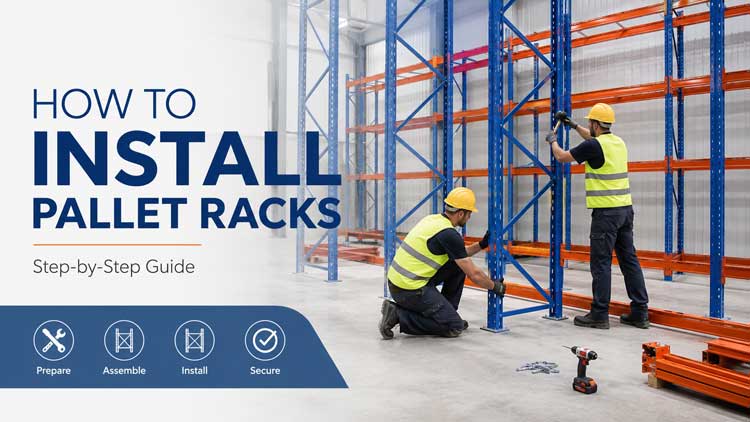
Pallet racking systems are one of the most widely used warehouse storage solutions in logistics centers, distribution facilities, manufacturing plants, and retail warehouses worldwide. Proper installation is critical not only for maximizing storage capacity but also for ensuring workplace safety, regulatory compliance, and long-term structural stability.
At Aceally, our engineering team has supported pallet racking projects across North America, Europe, Australia, and Southeast Asia. Based on years of warehouse storage system manufacturing and installation experience, we have compiled this practical installation guide to help warehouse managers, contractors, and facility owners understand the correct pallet rack assembly process.
Whether you are installing selective pallet racking in a small warehouse or building a large-scale storage facility, following proper installation procedures can significantly reduce operational risks and improve rack lifespan.
Step 1: Assemble the Upright Frames
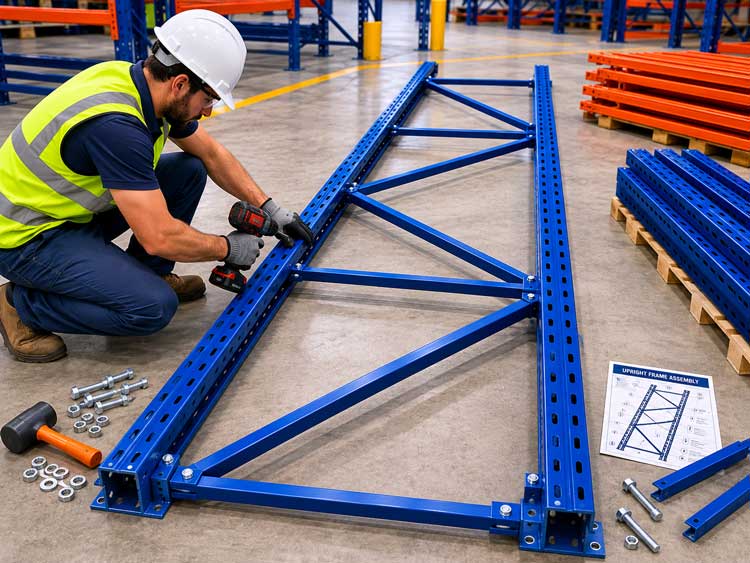
- Lay two upright posts flat on the ground, parallel to each other.
- Attach the horizontal and diagonal braces between the posts, starting from the bottom.
- Loosely fasten all bolts initially—do not fully tighten.
- Square the Frame: Measure the diagonals (corner-to-corner). Adjust until both measurements are identical.
- Torque all bolts to the manufacturer’s specification (typically 45–59 Nm / 33–43 ft-lbs).
- Attach the baseplate to the bottom of each upright post, ensuring it is flush.
Step 2: Position & Plumb the Uprights
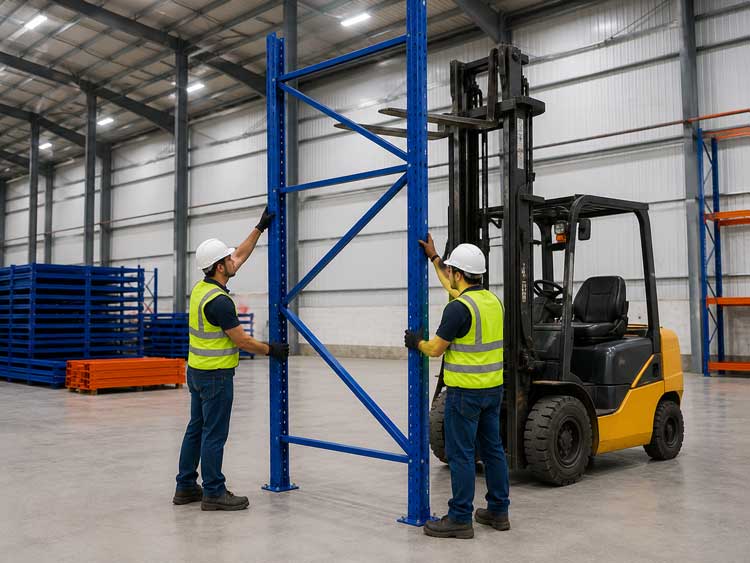
- Lift the assembled upright frames into their marked positions. A minimum of two workers is required for safety.
- Use temporary bracing or a helper to stabilize the uprights.
- Check for plumb (vertical alignment) with a level. Use shims under the baseplates to correct any unevenness from the floor.
- Maintain the correct bay width (distance between uprights) as specified.
Step 3: Install the Beams
Start with the lowest level first for stability.
- Align the beam connectors (rivets) with the corresponding slots on the uprights.
- Use a rubber mallet to gently tap the beam down until the connectors are fully seated in the slots.
- Install Safety Pins/Clips: Insert a safety lock into each connector. This is critical to prevent beams from dislodging.
- Check that the beam is level. Repeat for all required beam levels.
- For multi-bay runs, install row spacers between uprights at the top to maintain consistent spacing and lateral stability.
Step 4: Anchor the Racks to the Floor
- Through the holes in the baseplate, mark the anchor locations on the concrete.
- Drill holes to the specified depth and diameter (typically 2.5″ embedment).
- Clean all dust from the holes. Insert the wedge anchors.
- Tighten the anchor nuts with a torque wrench to the required setting.
- Recheck the upright for plumb after anchoring.
Step 5: Install Decking & Accessories
- Place wire mesh decking or pallet support bars onto the beams.
- Install column protectors and end-of-aisle guards on uprights vulnerable to forklift impact.
- Add backstops to prevent pallets from being pushed off the rear.
Step 6: Final Safety & Quality Check
- Inspect all connections: Ensure every beam has a safety pin, and all bolts/anchors are torqued correctly.
- Verify alignment: Rows must be straight, uprights plumb, and beams level.
- Clearance Check: Confirm adequate forklift aisle width and overhead clearance.
- Labeling: Affix capacity plaques clearly stating the maximum load per level and per bay.
Critical Safety Rules & Best Practices
Never overload: Exceeding the rated capacity causes structural failure. Always place heaviest pallets on the lowest levels.
- No Modifications: Do not cut, weld, or alter any rack components without engineer approval.
- Professional Installation: For large warehouses, high-rise systems, or seismic zones, hire certified installers.
- Post-Installation: Conduct regular inspections (daily visual checks, monthly audits) and immediately repair any damage.
By following these steps rigorously, you will ensure a safe, stable, and code-compliant pallet rack installation that optimizes your warehouse storage for many years to come.
Industry Standards and Compliance Requirements
When installing pallet racking systems, it is important to comply with local building regulations and recognized industry standards. Depending on your location, the following standards may apply:
United States
- RMI ANSI MH16.1 – Specification for the Design, Testing and Utilization of Industrial Steel Storage Racks
- OSHA Warehouse Safety Requirements
- International Building Code (IBC)
Europe
- EN 15512 – Steel Static Storage Systems
- EN 15620 – Tolerances, Deformations and Clearances
- EN 15635 – Application and Maintenance of Storage Equipment
Australia
- AS 4084 – Steel Storage Racking
Compliance with these standards helps ensure structural integrity, worker safety, and insurance eligibility.
Common Installation Mistakes to Avoid
Even experienced warehouse operators can make installation mistakes that compromise rack performance. The most common issues include:
- Skipping Floor Anchoring
Unanchored racks are vulnerable to impact damage and may become unstable under load.
- Improper Beam Engagement
Beam connectors must be fully seated and secured with safety locks. Missing safety pins are a leading cause of beam dislodgement.
- Uneven Floor Conditions
Installing racks on unlevel concrete without shims can result in leaning uprights and uneven load distribution.
- Ignoring Load Capacity Ratings
Every rack system is engineered for a specific load capacity. Overloading can cause permanent deformation or structural collapse.
- Failure to Conduct Regular Inspections
Routine inspections help identify damaged components before they become safety hazards.
Frequently Asked Questions
- Do pallet racks need to be anchored to the floor?
Yes. Most pallet rack systems require floor anchoring to meet safety regulations and manufacturer recommendations. Anchoring significantly improves rack stability and impact resistance.
- How level does a warehouse floor need to be?
Minor floor variations are common. Shims should be used beneath baseplates to achieve plumb uprights and maintain proper load distribution.
- Can pallet racks be installed without professional installers?
Small selective pallet rack systems can often be installed by trained maintenance teams. However, large-scale, high-bay, drive-in, push-back, or seismic-zone installations should always be completed by qualified professionals.
- How often should pallet racks be inspected?
Daily visual inspections are recommended, with comprehensive monthly or quarterly audits depending on warehouse traffic and operational intensity.
- What is the most important safety feature during installation?
Proper anchoring, beam safety locks, and accurate load capacity labeling are among the most critical safety requirements.
Why Proper Pallet Rack Installation Matters
A correctly installed pallet racking system delivers far more than storage space. It improves warehouse efficiency, protects inventory, reduces maintenance costs, and helps prevent workplace accidents.
Investing time in proper rack assembly, alignment, anchoring, and safety verification ensures that the storage system performs reliably throughout its service life. Whether operating a small warehouse or a large distribution center, following industry best practices during installation is one of the most effective ways to maximize the return on your storage investment.